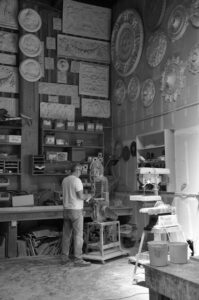
I was in Los Angeles last week to talk to the people at Turquoise Mountain. They are a charity that is helping to preserve and revive the crafts of Afghanistan. It is a passion of mine. Sadly, in the United States these crafts are dying. The cost of labor to produce the high quality goods of a craftsman and artisan is overwhelmed on a daily basis by the “walmartization” of this country. People pay good money to view quality arts and crafts in museums as well as take tours of beautiful homes, and yet they don’t think about surrounding themselves in Continue Reading
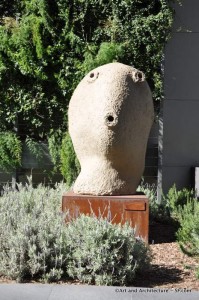
555 Mission Street SOMA Moonrise East December The sculptor and mixed media artist is a Swiss, based in New York named Ugo Rondinone. The sculptures are of mottled aluminum. Moonrise is the title of a series of 12 giant, ghost-like sculptures each named for a month of the year, and standing nine feet high. Their amorphous shapes and color make them look like primitive sculptures. Each one wears a different expression. I can’t presume what the artist was going for, so why that particular face for that particular month? It would really be fun to sit around and talk about Continue Reading

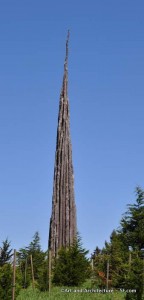
The Presidio Near the Arguello Gate Entry I have always been a fan of Andy Goldsworthy. I love the ethereal and temporary aspect of his work. This is titled Spire and is at the beginning of the Bay Area Ridge Trail near the Arguello Gate, west of Inspiration Point Overlook and north of the Presidio Golf Course Clubhouse. This area is part of the historic forest of the Presidio, and is part of its designation as a National Historic Landmark District. The forest was planted over 100 years ago and, as usual, the Eucalyptus are doing just fine but the Continue Reading

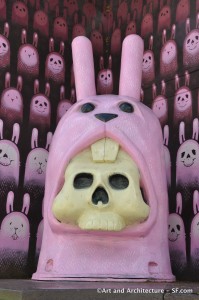
Silly Pink Bunnies and Love in the Lower Haight. In October of 2010 the long wall on the corner of Haight and Laguna that surrounds a series of buildings that once housed the UC extension campus became a mural collective. Called “Love in the Lower Haight,” the mural stretches 100 feet up Haight Street from Laguna Street and 75 feet on Laguna. The mural is granted for at least one year with the possibility of a longer extension. An estimated 12 local artists worked on it, while an additional component let residents add their personal touch to the project. Information about the Continue Reading

18th and Lapidge Mission This is The Goddess of Light and Creativity on the Woman’s Building in the mission district of San Francisco. Particularly at 18th and Lapidge. The building has two walls of a dramatic mural that pay homage to women. The murals were created by a team of seven San Francisco women and is called “Maestrapeace”. The Goddess of Light and Creativity sits atop the waters of life flowing beneath her and transforming into fabric designs from around the world. The Mission District mural features such notable women as Georgia O’Keefe (an innovative American artist) and Rigoberta Menchu Continue Reading
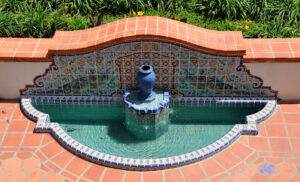
This is the Adamson House, also known as Vaquero Hill, a historic house with lovely grounds in Malibu, California. It has been called the “Taj Mahal of Tile” due to its extensive use of decorative ceramic tiles created by the Malibu Potteries company. The house was built in 1930 for Rhoda Rindge Adamson and Merritt Huntley Adamson, based on a Mediterranean Revival design by Stiles O. Clements of the architectural firm of Morgan, Walls & Clements. The tiles are what drew me to the house. Malibu Potteries produced an amazing variety of shapes, sizes, colors, and designs. Sadly only in Continue Reading
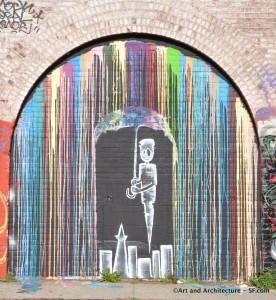
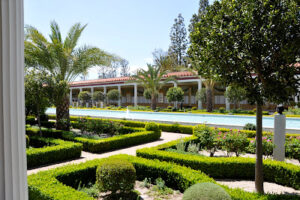
In 1954, oil baron J. Paul Getty opened a gallery adjacent to his home in Pacific Palisades. Can you imagine, you were able to walk around his home and view his collections. Visitors were limited but it must have been very intimate. When he ran out of room, he built a second museum on the property down the hill from his original home. In 1974 he opened the Getty Villa as his second museum in a building inspired by the Villa of the Papyri at Herculaneum and incorporated additional details from several other ancient sites. Getty died in 1976 and Continue Reading
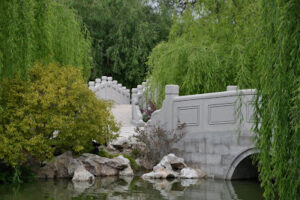
The Chinese Garden at the Huntington Library, Art Collections and Gardens, in San Marino, California. I saw the most amazing special exhibit by John Frame called “Three Fragments of a Lost Tale”. According to the gallery notes, “the project had its beginnings in a dream: Frame was jolted awake by what seemed like an unfolding story complete with cast and scenes. It would become his next body of work and, he says, may carry him through the remainder of his lifetime.” This was the first piece I saw upon entering the gallery and I was in love. The gallery was Continue Reading

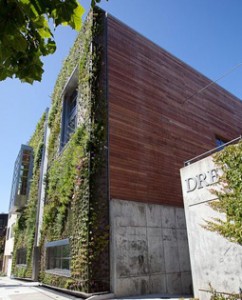
Using plants for architectural and artistic statements is as old as time, but I am fascinated about how it is becoming part of the main stream. I was driving down 10th and spotted this newly installed gem at the corner with Bryant. These things are so amazingly versatile. Indoors, outdoors, sun, shade, they apparently create their own atmosphere when inside so they aren’t bothered being inside shopping malls or the like. Patrick Blanc a French artist has been covering entire walls of buildings for 40 years. This one below is his at Marché des Halles in Avignon. You can read all Continue Reading
This is the back of the famous Fairmont Hotel in San Francisco, I am walking up California towards Mason. The front of this hotel is famous the world over, but has anyone ever noticed the absolutely beautiful wrought iron on the back? These walkways look down on a quaint little courtyard. The Fairmont is as much a part of San Francisco history as sourdough and dungeness crab. It was built by Tessie Fair Oelrichs, whose father made his money in the Comstock Silver Boom. Designed by James and Merritt Reid it was scheduled to open in 1906. The Earthquake and Continue Reading
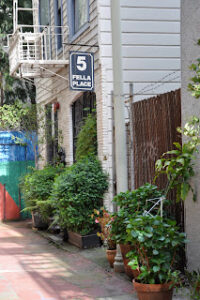
A friend of mine lives on this little alley, and after I took this picture I started to think about how many alleys there are in San Francisco. I too live on a one block long alley, that is off of another one block long alley. I am not quite sure why San Francisco is chock-a-block full of them, but they are fun to explore. It is a practice of San Francisco to rename alley’s for famous people. These include: Isadora Duncan (she was born a block away), Dashell Hammett (He lived at #20 in the 1920’s) , Jack Kerouac Continue Reading
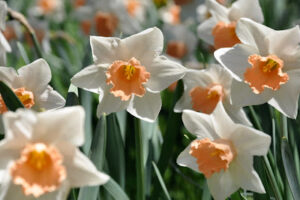
* McLaughlin’s Daffodil Hill Ranch in Volcano, California. Daffodil Hill is a 4 acre ranch that has been in the same family since 1887. Wagon pioneers Arthur and Lizzie McLaughlin were the original owners. The ranch was a stopping place for drivers bringing timber down from the Sierras to the Kennedy and Argonaut mines, during the gold rush. Now it is open to the public and lives on donations. There are over 300 varieties of daffodil’s and they plant an average of 6000 new bulbs every year. It is typically open from Mid March to Mid April, but mother nature Continue Reading

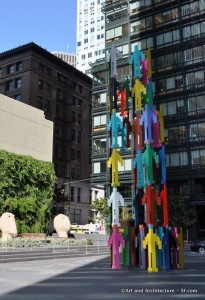
555 Mission Street SOMA Public versus private art. This piece entitled Human Structures by Jonathan Borofsky is a permanent installation at 555 Mission Street. The two heads are part of a series of three by Ugo Rondinone entitled Moonrise Sculptures. The city of San Francisco has two ordinances to promote art. The first is a zoning code requiring downtown buildings to include privately owned public open space. The second is a twenty-five year old law requiring that developers with large projects in the Financial District and along upper Market Street must spend at least 1 percent of their total construction budget Continue Reading

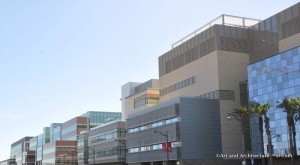
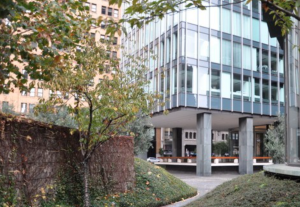
Mission Bay What happened to architecture? This is not architecture, this is value engineering. These buildings were cliches before they were finished. No one is going to fly hundreds of miles to the great city of San Francisco and snap pictures of these monstrosities, unless of course they are urban planners. I would like to leave the more technical aspects of why this is off the mark to an architect blogger, you can read his succinct points on architecture and then you can contemplate why these building miss in so many ways. The above photo was taken in the newest Continue Reading

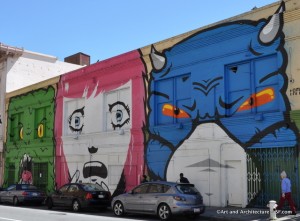
Golden Gate and Market The Tenderloin This mural is entitled “Fear Head” it was installed as part of the Wonderland exhibit in 2009. The creators are Roman Cesario and Mitsu Overstreet. Wonderland was the brain child of a teacher at SF Art Institute, Lance Fung. Wonderland created a lot of interesting chatter in the blogsphere at the time. Adrienne Roberts of SFMOMA wrote of her concerns, that I felt were a tad highfalutin regarding bringing art to the tenderloin. You can read her article, Wonderland a World Turned Upside Down, here. For those that don’t live in San Francisco, it Continue Reading
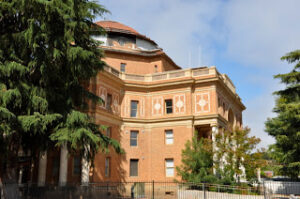
The City Hall is a gem of a building sitting aside a wonderful city park. The town itself is being revitalized with a lot of modern chain stores, but the downtown still holds its historic charm. Sadly, like so many valley towns in California it is suffering from these terrible economic times. The building was originally the City’s historic administration building and was completed in 1918 to serve as the Colony of Atascadero’s headquarters. The Colony was founded by Edward Gardner (E.G.) Lewis of Missouri, as California’s first master planned community. The community was to be sustainable and progressive. The Continue Reading

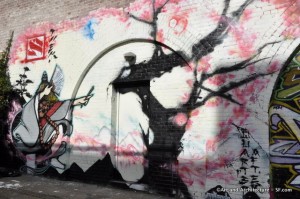
Berwick Place and Heron Street Unknown Artist – I love the tree as an opponent. The light at this end of Heron was not particularly good, it is a very narrow alley with a building blocking the light from this part of the wall, but the images are wonderful. The subtle use of pink to infer cherry blossoms, just shows such a level of artistic ability.
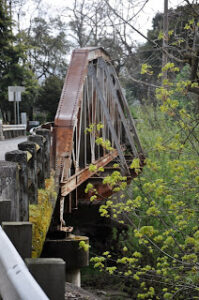
This truss bridge is the center of an acrimonious debate going on in Sonoma, California. It is the Watmaugh Road Bridge built in 1929. It was dedicated as an historic landmark in 1981. Today the county engineers want to replace it, and the preservationists want to rehab it. We will have to watch, probably for years, to see what happens. Bridges are so interesting. They can be so beautiful, and yet, over the years they have really, simply become functional. Granted, when big important bridges are built, lots of thought for the local town or cities “image” go into it, Continue Reading
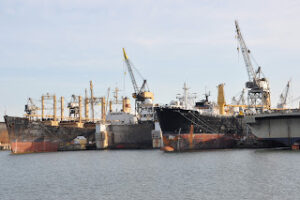
Hunters Point Naval Shipyard. The original docks were built on solid rock in 1916, they were thought to be the largest in the world at over 1000 feet long. During the 20th century much of San Francisco Bay shoreline was extended by landfill, this included Hunters Point. Between World War I and WWII Hunters Point was used by the Navy and was the largest deep water port between San Diego and Washington. The key fissile components of the atomic bomb were loaded onto the USS Indianapolis, July of 1945 from here. Some of the piers are still used today, but Continue Reading

Pacific Gas and Electric Building 245 Market Street Embarcadero/Financial District Above the arched entryway to the Pacific Gas and Electric building is this bas-relief depicting the primary activities of the company, hydroelectric power. At the top is a waterworks with water pouring through three openings symbolizing the “falling waters” that come from the mountains. This sign is flanked with two kneeling men facing the center. Under the base is a head of a grizzly bear, set amidst foliage, claws showing over the rim of the archway. The sculptor for this entry way was Edgar Walter. Edgar Walter was born in Continue Reading
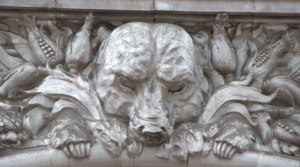
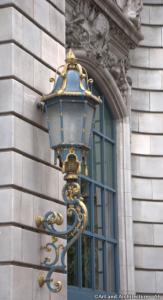
245 Market Street Financial District / Embarcadero The seventeen story Pacific Gas and Electric Company General Office Building, designed by Bakewell & Brown and built between 1923 and 1925, is one of a series of skyscrapers built during the 1910s and 1920s which imparted to San Francisco its downtown character. This character of large ornamented classic buildings is fast being lost with newer modern style buildings. 245 Market was also one of the first steel skyscrapers built in San Francisco. The building was enlarged in 1945-1947 to the design of Arthur Brown, Jr. The addition, which has its own address at 25 Beale Street, Continue Reading

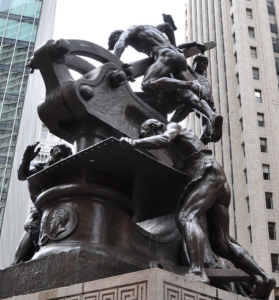
Market at Bush and Battery Mechanics Monument Douglas Tilden This sculpture by Douglas Tilden was one of three major art works for the Market Street Beautification Project at the turn of the 20th century. It was funded with a bequest of $25,000 from James Mervyn Donahue, the son of the late Peter Donahue, who in 1850 started the state’s first ironworks and machine shop, established the first gas company for street lighting in the city in 1852, and later initiated the first streetcar line. Commissioned to create a monument for the Donahues, Tilden had difficulty finding an idea. Taking a Continue Reading

Financial District One Bush Plaza Crown Zellerbach Building This beautiful and timeless fountain was made in 1959. It was a creation of artist David Tolerton. Tolerton was born in 1907 and died of natural causes at 93. His father came to the Bay area in 1915 and owned an art gallery on Sutter Street in San Francisco. Tolerton studied philosophy at Stanford University from 1926 until 1928, then attended the San Francisco Art Institute, where he also taught. He also studied ironworking in France, Spain, Italy and Germany. His work was almost exclusively in metal, but apparently he spent some time Continue Reading

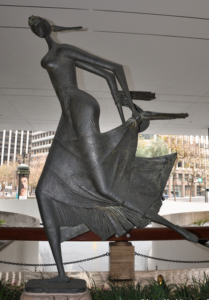
Financial District One Bush Plaza Woman in Bronze Marcello Mascherini 1959 Marcello Mascherini was an Italian sculptor, born in Padua, who lived from 1906 to 1983. While an extremely famous sculptor in his time, little is written about him today. Marcello Mascherini was a prolific sculptor who made an impact on Italian art. Mascherini’s sculptures are on display in Rome at Palazzo Montecitorio where they have rested since after his death in 1969. This particular sculpture was mentioned in Life Magazine’s “Life Guide – Art in Buildings” in 1963.

1 Bush Plaza Market Street Area One Bush Plaza, also known as the Crown Zellerbach Building, stands as a monument to International Style. International style is a phase of Modern architecture that began at the beginning of the 20th century, and continues as a dominant style in corporate and institutional structures in the 21st century. The term originated from the book International Style (1952). The book documented the International Exhibition of Modern Architecture held at MOMA in New York City in 1932. International Style encompasses three elements: expression of volume rather than mass, emphasis on balance rather than preconceived symmetry, and expulsion Continue Reading
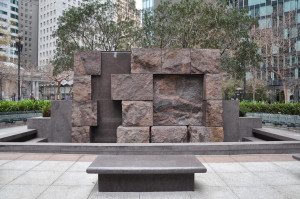
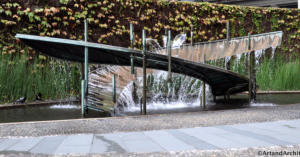
514 Market Street This Fountain has now been replaced – see bottom of this post. Waterfall Walls by Elyn Zimmerman This Public Art was provided by the 1% for Public Art Program This view is actually walking from Stevenson Street towards Market Street, which affords the nicest view. When viewing Elyn Zimmermans web page you realize instantly this artists loves large pieces of stone. * This is the view from Market Street. The piece was Commissioned by the developer Tishman/Speyer and the San Francisco Arts Commission, in 1991. Zimmerman was born in Philadelphia, PA, received both undergraduate and Master’s degree in Continue Reading
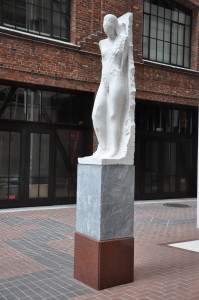
SOMA Financial District 49 Stevenson Escalieta 1 by Manuel Neri – Marble – 1985 This is public art created by the 1% Public Art Program Manuel Neri (born April 12, 1930) is an American sculptor, painter, and printmaker and a notable member of the “second generation” of the Bay Area Figurative Movement. Neri was born in Sanger, California, to immigrant parents who had fled Mexico during political unrest following the Mexican Revolution. He began attending college at San Francisco City College in 1950, initially studying to be an electrical engineer. After taking a class in ceramics, he was inspired to Continue Reading
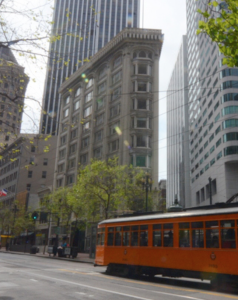
Flat Iron Building 540 Market Street Market Street / Financial District Built in 1913 the Flatiron Building was designed by Havens & Toepke. It is one of the few, and most distinctive extant flatirons on Market Street. Flatirons were common north of Market both before and after the 1906 Earthquake and Fire, but the destruction of many of them such as the 1892 Crocker Building at Post and Market for high-rises has made them rare. The skeletal structure of the building is well-adapted to an unusual (for San Francisco) Gothic treatment in which three-part bays are separated by thin Continue Reading